
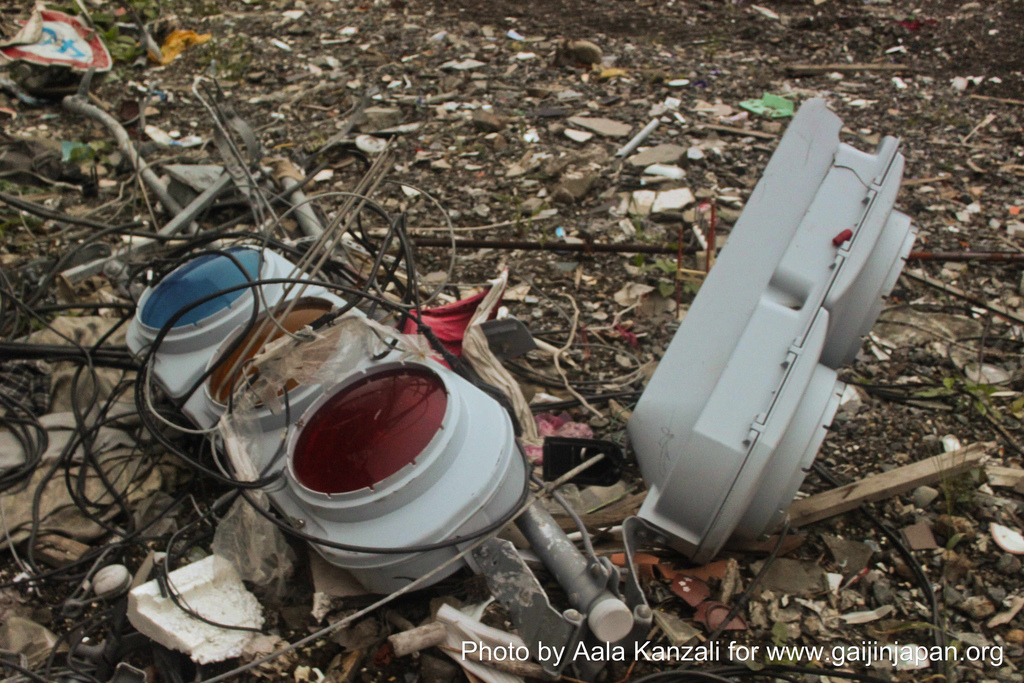
Les séismes ou tremblement de terre sont plus que fréquent au Japon. Il s’en produit tous les jours, d’intensité plus ou moins faible. Mais sauriez-vous quoi faire si vous étiez confronté ? Et savez-vous vous préparer pour les gérer ? Je vous propose ici de quoi anticiper vos besoins et des conseils pour gérer ce genre de situation.
Le 11 mars 2011, le Japon a été frappé par le plus violent tremblement de terre de son Histoire, d’une magnitude de 9,2 sur l’échelle de Richter. Celui-ci a été suivi par un Tsunami. Le tout à coûté la vie à plus de 15 000 personnes. C’est beaucoup, mais peu à la fois en rapport avec la gravité de la catastrophe. Mais comment ce chiffre a-t-il pu être limité à ce point (souvenez-vous que plus de 220 000 personnes sont décédés le 26 décembre 2004 suite au Tsunami qui a touché l’Asie du Sud-est, et notamment l’Indonésie) ? Le Japon, dispose d’une expérience et d’un savoir faire en matière de gestion des séismes tel qu’ils peuvent sauver des dizaines de milliers de vies. Je vous propose de découvrir quelques règles de base à suivre dans ce genre de situations.
Qu’est-ce qu’un tremblement de terre ? : Notions de bases
Le tremblement de terre ou séisme, est une activité terrestre générée par une libération soudaine d’énergie qui entraîne une secousse plus ou moins violente de la terre. Ces activités ont 3 origines différentes :
- Séisme tectonique (rupture d’une faille ou d’un segment de faille)
- Séisme volcanique (intrusion et dégazage d’un magma)
- Séisme à origine naturelle ou induit par l’activité humaine (explosion …)
Le séisme tectonique est le plus répandu dans le monde.
Les tremblements de terre sont mesurés par des sismographes dans le cadre de l’activité scientifique appelée sismologie. La puissance d’un tremblement de terre est généralement exprimée en terme de Magnitude sur l’échelle de Richter (mais il existe toutefois de nombreux autres modes de quantification).
Que faire lors d’un tremblement de terre ?Guide des gestes et pratiques à suivre
La terre tremble sous vos pieds ? Vous ne vous êtes pas préparé à cela ? Cela pourrait être réellement dangereux. Et ce n’est pas le genre de choses avec lesquelles il faut rigoler. C’est donc pour cela que je vous donne une série de gestes à faire pour anticiper et gérer un éventuel séisme de grande intensité. Prenez cette menace au sérieux.
-
Avant le séisme ou tremblement de terre :
- Avoir des extincteurs
- Garder votre baignoire remplie d’eau, dans la mesure du possible (peut-être dangereux pour les enfants en bas âge)
- Couper l’arrivée de gaz lorsque vous ne l’utilisez pas
- Sécurisez l’ensemble du mobilier en le fixant aux murs (avec des vis par exemple)
- N’empilez pas des objets sur une hauteur trop élevé (ils risqueraient de tomber lors d’un tremblement de terre). Surtout n’empilez jamais des objets lourds, car si ils venaient à tomber, vous pourriez être blessé.
- Garder les objets lourds au sol, ils n’auront ainsi aucune chance de vous tomber dessus
- Garder du matériel et des aliments de survie : nourriture en conserves, eau en bouteille, kit de premiers soins, une radio portable (réglée sur une station en Anglais), une lampe de poche, des bougies, des allumettes, des piles, des sacs plastiques, serviettes, savon, vaisselles et couverts jetables, un petit réchaud à gaz. Vous pourrez en trouver en vente un peu de partout.
- Préparez des vêtements qui peuvent s’avérer utile (surtout si vous avez des enfants) tels que des sous-vêtements de rechange. Pour les dames, conserver des produits nécessaires pour vos menstruations
- Garder des pièces de monnaies en permanence sur vous. Cela sera utile pour les distributeurs de boissons et les téléphone à pièce, au cas où
- Conserver un téléphone portable toujours rechargé sur vous. Il serait dommage que vous n’ailliez plus de batterie à ce moment là
- Conservez vos pièces d’identités en permanence sur vous. Si vous êtes dans la rue, que votre bâtiment a disparu, vous serez content de pouvoir justifier de votre identité auprès de votre ambassade.
- Repérez les lieux de rassemblement officiels, lorsque vous arrivez à un nouvel endroit. Ils sont indiqués dans les rues, sur les cartes, et vous pouvez les demander aux policiers ou dans les centres communaux.
- Prévoyez un lieu de rassemblement avec vos amis et familles sur place, au cas vous seriez séparé lors d’un tremblement de terre. Il serait dommage de rajouter de l’inquiétude à une telle expérience, si vous vous retrouvez tous, cela vous enlèvera beaucoup de stress inutile
- Inscrivez-vous à votre ambassade lors de votre arrivée. Il est utile que l’on sache que vous êtes ici en cas de problème.
-
Pendant le tremblement de terre ou séisme :
- Éteignez immédiatement le gaz si vous êtes en train de l’utiliser, même si le séisme est de faible intensité
- Ouvrez immédiatement au minimum une porte (en effet, lors de tremblement de terre les portes bougent et peuvent se bloquer)
- Mettez vous à l’abri des objets qui pourraient tomber et s’avérer dangereux pour vous (à l’entrée d’une porte, sous une table, sous un bureau …)
- Privilégiez les petites pièces ou placard car ils sont plus résistants que les grandes pièces. Les toilettes peuvent être un bon endroit où se réfugier.
- Si vous habitez dans une grande ville, restez en intérieur, ne sortez pas. L’extérieur peut s’avérer extrêmement dangereux avec des vitres qui voleraient en éclats ou encore des bâtiments qui pourraient s’écrouler (en tout ou partie).
- Allumez votre radio (ou la télévision si elle marche encore) et écoutez les informations qui vous sont données.
- Si vous voyez un feu qui commence à s’allumer, éteignez-le immédiatement avec votre extincteur ou l’eau que vous avez conservée dans votre salle de bain.
- Si vous êtes en train de conduire, arrêtez-vous immédiatement, laissez vos clés sur le contact et sortez de votre voiture (ne fermez pas la porte côté conducteur). Rendez-vous au point de rassemblement le plus proche. Votre voiture vous sera restituée après que la situation soit revenue à la normale (ne vous inquiétez pas c’est le Japon, l’honnêteté est importante pour les japonais).
- En cas de Tsunami (une alerte sera donnée) dans les zones concernées, fuyez rapidement vers les hauteurs de la ville où vous vous trouvez. Les zones d’évacuations sont très bien indiquées. Suivez les locaux et ne restez pas seul.
-
Après le séisme ou tremblement de terre :
- Si vous êtes à l’intérieur d’un bâtiment, attendez les annonces sonores provenant de l’extérieur. Elles seront données en Japonais et en Anglais, et vous indiqueront quoi faire et quand vous pourrez sortir.
- Si vous êtes bloqués, essayez de téléphoner à la police (110) ou à un proche, si vous en avez la capacité.
- Si vous voyez un feu, éteignez-le immédiatement. Le feu est le pire ennemi lors d’un tremblement de terre.
- Dès que vous en avez la possibilité, rendez-vous au point de rassemblement prévu dans chaque quartier (habituellement dans un parc).
- Prévenez, dès que possible, vos amis et votre famille que vous allez bien, et prenez de leur nouvelles. Réduisez au maximum le stress.
- Dans les heures qui suivront, et dès que la possibilité vous en sera donnée, rendez-vous à votre ambassade et voyez avec eux les procédures à suivre.
- Ne restez pas seul, suivez les japonais, ils sont entraînés depuis leur plus tendre enfance.
- Aidez les autres, ne laissez pas les potentielles victimes sans soutien, mai ne prenez pas de risques dangereux non plus
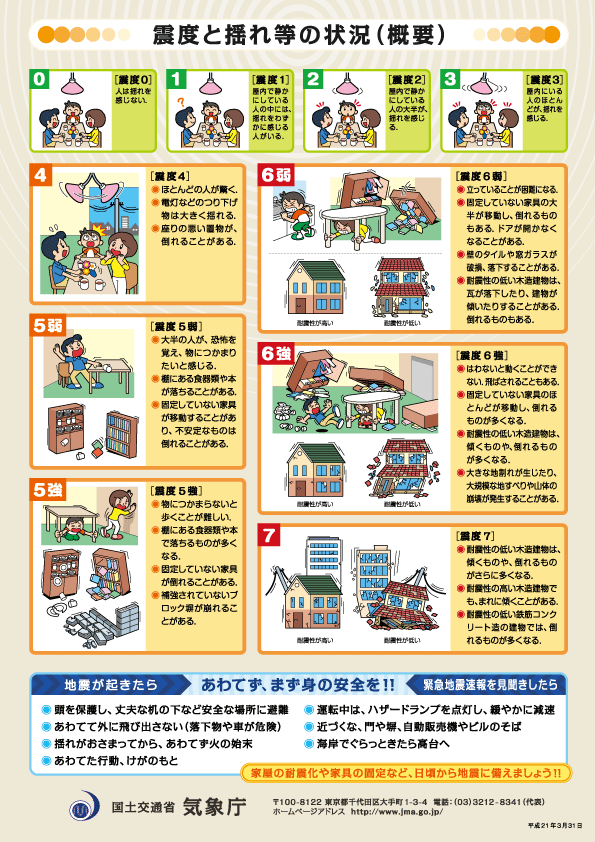
Une liste de vocabulaire japonais utile
Si vous ne parlez pas le japonais, je vous recommande vivement d’être capable de connaitre les basiques de la langue anglaise si vous voyagez au Japon. En effet, en cas de séisme, les informations seront données en Japonais et en Anglais par les autorités japonaises. Mais au cas où, je vous donne quelques mots de vocabulaire qui peuvent s’avérer utile.
– Je ne peux pas parler japonais : NIHONGO GA HANASEMASEN
– Je ne comprends pas le Japonais : NIHONGO GA WAKARIMASEN
– Aidez-moi s’il vous plaît : TASUKETE KUDASAI
– Parlez vous Anglais ?: EIGO GA HANASEMASU KA ?
– Parlez-vous Français. : FURANSUGO GA HANASEMASU KA ?
– Appelez une ambulance s’il vous plaît : KYUUKYUUSHA O YONDE KUDASAI
– Où est le centre des désastres ?: SAIGAI TAISAKU YOUHIN NO URIBA WA DOKO DESU KA ?
– Je veux visiter la salle de simulation des séismes : GIJI JISHIN TAIKIN SHITSU NI ITTE MITAI DESU
– Où est le site d’évacuation ? : KINKYUU HINANJO WA DOKO DESU KA ?
– Je suis blessé : KEGA O SHIMASHITA
Je vous conseille de garder cette liste avec vous, voir même de la compléter avec d’autres phrases utiles si vous en avez, en permanence, surtout si vous ne parlez pas japonais.Et regardez la liste des applications smartphones utiles pour un voyage au Japon, certaines pourront vous aider. Un tremblement de terre peut frapper à tout moment.J’espère que vous n’aurez pas à expérimenter un tremblement de terre et que votre voyage sera des plus joyeux.

plein d’infos, très bon article.
Merci beaucoup. Cela fait plaisir que l’article t’ai plu.
PS: encore une fois je t’ai mis en « inconnu » car le pseudo que tu as choisi n’était composé que de mot clé n’ayant aucun intérêt. La règle c’est un pseudo + éventuellement des mots clés. Et une adresse mail valide.
Bonjour !
Je suis arrivee sur ton blog, apres qu’un des lectrices du mien m’en ai parle. Il est vraiment complet et super interressant. J’aurais aime le trouver avant de partir !
Je poste sur cet article car j’ai remarque une legere erreure a cet endroit :
Je ne peux pas parler japonais : NIHONGO GA HANISHIMASEN –> hanAshimasen.
Enfin rien de bien grave !
Je me permet de te dire que je compte mettre ton blog en lien, et certainement publier un petit article. J’espere que cele te ramenera du monde ! Ton blog est vraiment tres interessant.
PS: pardon moi l’absence d’accents, je n’ai pas encore trouve comment les ecrire avec un clavier en japonais !
Salut Rill,
merci pour ton commentaire et tous tes compliments, et merci à ta lectrice pour la recommandation 😀
Merci aussi pour avoir relevé la faute 😉
PS: pas de soucis pour l’absence d’accent